How to do a Homeschool Bird Unit Study This Fall.

October 21, 2009


Thank you for visiting HomeschoolBytes again! Feel free to contact me with questions or suggestions. Make sure to subscribe to my RSS feed or get email updates any time I post new content.


Gull

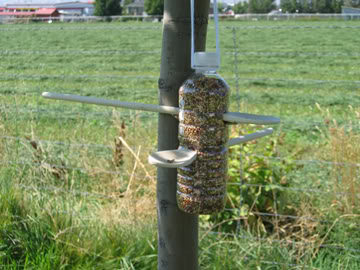
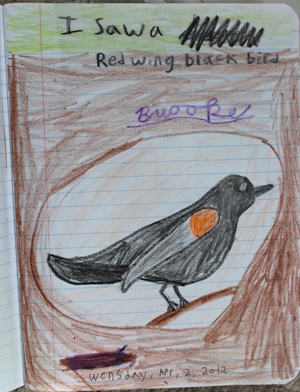
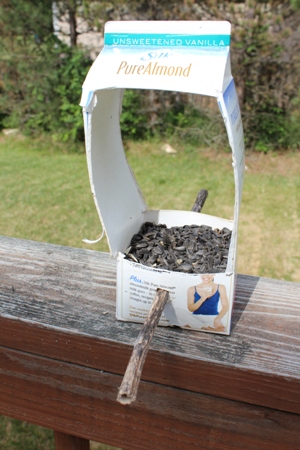
Do you remember coating pine cones in peanut butter and bird seed, hanging them outside, and then pressing your nose against the back window waiting for the birds to come?

  1. Here’s another article with lots of easy bird feeder ideas and what birds eat what.
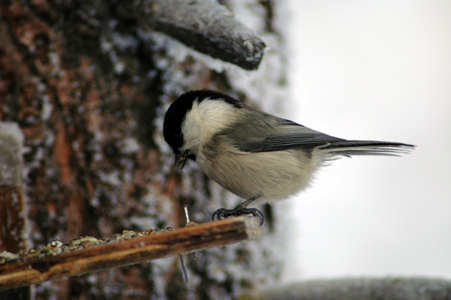
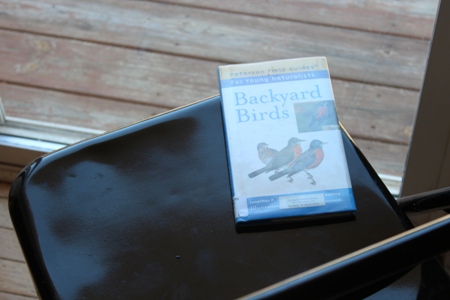
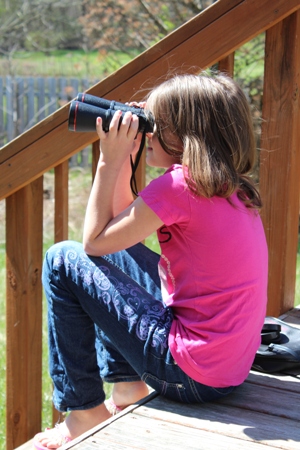
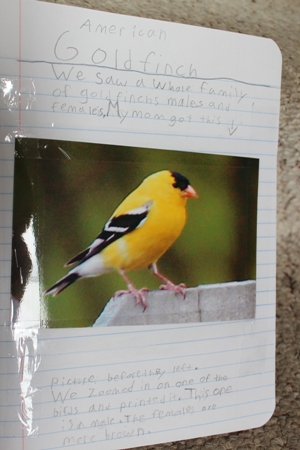
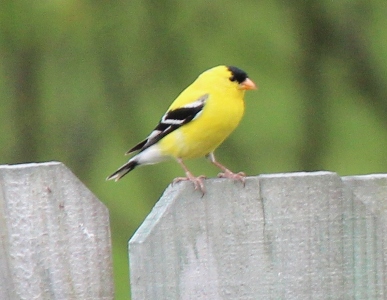
  2. A couple of years ago, we filled a few bird feeders, perched them on the railing of our deck and had a great time watching the birds come and go.  I was at a loss to figure out which birds were which until we checked out this great bird guide from the library that is perfect for beginners.  I love that it is organized by color, so when the kids saw a yellow bird, they would flip to that section in the book and then search for ‘our’ bird.
  3. Here are the ‘Eastern’ and ‘Western’ versions of the bird guide:

  4. Another amazing resource I just discovered is What Bird.com.  This site has so much bird information it can be overwhelming.  For a start, check out some of these links:

Enjoy!

Do you have any fun bird-schooling stories or favorite bird study resources?  I’d love more ideas.  Thanks!

Share and Enjoy:
  • Print
  • Digg
  • Technorati
  • RSS
  • MySpace
  • del.icio.us
  • Facebook
  • Google Bookmarks
  • StumbleUpon
  • Twitter

Posted under Science Curriculum, Science Websites

Flubber Science Experiment – The Best Kid’s Craft Video!

August 28, 2009

tim_flubber

I posted a recipe for Flubber last year and we decided it would be a fun rainy day activity to do today.

(Especially, since the kids were moaning with boredom because they are grounded from the computer, the TV, AND all their basement toys – I’m tired of cleaning them up)

Here’s the recipe again:

Bowl #1 – Mix thoroughly

  • 1 cup white glue
  • 3/4 c warm water
  • food coloring (opt.)

Bowl #2 – mix thoroughly

  • 1/2 c. warm water
  • 2 t. Borax (20 Mule Team is one brand)

After mixing each bowl separately, mix them together.  It is amazingly cool as a polymer is formed.   Read about the science behind the reaction here

Stir with a spoon, or for the more adventurous, mix with your hands.  Don’t quit, the gluey slime will suddenly harden into a great cross between slime and silly putty.

Even the baby can enjoy Flubber, just make sure he doesnt’ eat it.

jacob_flubber

Share and Enjoy:
  • Print
  • Digg
  • Technorati
  • RSS
  • MySpace
  • del.icio.us
  • Facebook
  • Google Bookmarks
  • StumbleUpon
  • Twitter

Posted under Homeschool Crafts, Science Curriculum

Potted Plants – Fun and Responsibility for Kids – Tuesday Tips

July 7, 2009

seedling

If you’re looking for a project to get your kids outside, teach some responsibility and science, try a tomato plant!

I normally dread my kids seeing commercials on TV, but when my 6-year-old begged for a ‘Topsy-Turvy Tomato planter, I was intrigued.  It’s a hanging sack that holds the tomato roots and potting soil, while the plant itself grows out of the bottom of the sack, in the air and off the ground.

What a great homeschool project!

We quickly figured out you can do the same thing by cutting a hole in the bottom of a 5-gallon bucket.  We gathered 4 buckets, each kid chose a plant, and the buckets are now hanging from a couple of 2 x 4′s suspended between the slide structure and our fence.  One of the kids chose a zucchini plant.  Who knew they could all grow upside down?

tomatoes_buckets

Each child is responsible for watering, fertilizing, and . . . picking and eating the produce - the best part.  It’s a fun introduction to responsibility, work, and its rewards.  Not to mention a good precurser to getting a pet.  If they can’t keep their tomato plant alive and watered, they aren’t ready for a pet.

Did you find something that worked well for you this week?  Share your tips with the rest of us!

Share and Enjoy:
  • Print
  • Digg
  • Technorati
  • RSS
  • MySpace
  • del.icio.us
  • Facebook
  • Google Bookmarks
  • StumbleUpon
  • Twitter

Posted under Science Curriculum, Tuesday Tips

Online Reading, Writing, Science Curriculum Free May 4th – 8th!

April 23, 2009

learningaz

Looking for some online literacy and science curriculums?

Learning A-Z is having a free trial week in honor of Teacher Appreciation Day.  If you’re investigating literacy resources, this is a good time to check them out.

They offer the following:

  • Free all week long: Raz-Kids.com:  A collection of online books kids can choose, listen to, read along, or read on their own for $60/yr.  (Raz-Kids won Learning Magazine 2009 Teacher’s Choice Award for the Family)
  • Free on May 4th:  Reading A-Z: Everything you need to teach reading including phonics, leveled readers, lessons, worksheets, etc. for $85/yr.
  • Free on May 5th:  Science A-Z: A K-6 science curriculum with lessons, experiments, worksheets, etc. for $60/yr.
  • Free on May 6th:  Writing A-Z: Writing resources including research packets, mini-books, story cards, writing prompts, lessons, etc. for $30/yr.
  • Free on May 7th:  Vocabulary A-Z: After building your word list, a lesson generator will give you a week’s worth of lessons, activities, games, and a graphic organizer.  $30/yr.
  • Free on May 8th:  Reading-Tutors:  If you need tutor lesson plans, this site offers 450 complete tutoring packets with lesson plans, games, activities, etc. for $60/yr.

[tags]reading, writing, phonics, science, homeschool, printables, worksheets, lessons, learning, teachers, websites, review, free [tags]

Share and Enjoy:
  • Print
  • Digg
  • Technorati
  • RSS
  • MySpace
  • del.icio.us
  • Facebook
  • Google Bookmarks
  • StumbleUpon
  • Twitter

Posted under Language Art Websites, Reading Curriculum, Science Curriculum, Writing Curriculum

Is Chemistry Confusing You? Try Chem4Kids.

March 13, 2009

test_tubes_sWould you like to see a picture of crystalline iron found only in meteorites?  Check out these real word examples of elements on Chem4Kids website – a site dedicated to helping teach chemistry concepts to kids.

Here is some of what Chem4Kids has:

Enjoy browsing their site!

As always, though, I think science for kids is best experienced first hand with experiments.  Do you have any good ‘kitchen table’ chemistry ideas?

Share and Enjoy:
  • Print
  • Digg
  • Technorati
  • RSS
  • MySpace
  • del.icio.us
  • Facebook
  • Google Bookmarks
  • StumbleUpon
  • Twitter

Posted under Science Curriculum, Science Websites

Looking for Answers to Your Homeschooling Nature Questions?

February 25, 2009

elephant_s
Isn’t this a great picture of an ‘E-fant’?  (my 3-year-old’s favorite animal)  Learning about animals is a favorite part of early education and teaches children science, reading, comprehension, and lots more.

Check out Exploring Nature, a great natural science website with:

Much of the site is free, but there is also a nominal $25/yr to access some of their member only resources.  Enjoy!

Share and Enjoy:
  • Print
  • Digg
  • Technorati
  • RSS
  • MySpace
  • del.icio.us
  • Facebook
  • Google Bookmarks
  • StumbleUpon
  • Twitter

Posted under Science Curriculum, Science Websites

Wierd Science is Fun! Free Videos and Experiments.

January 23, 2009

test_tube_s

Looking for fun science experiments?

Check out Weird Science, a website that offers a nice list of science experiments you can try at home, along with videos you can watch before you try the experiment yourself.  The videos are great, too, if you just want to avoid another messy science kitchen day.  Now if I could just find a science experiment that magically cleaned the kitchen table, counter, and sink full of dirty dishes :-)

Have you found a fun science site for homeschooling?  You’re welcome to post a link in the comment section to share with us!

Share and Enjoy:
  • Print
  • Digg
  • Technorati
  • RSS
  • MySpace
  • del.icio.us
  • Facebook
  • Google Bookmarks
  • StumbleUpon
  • Twitter

Posted under Science Curriculum, Science Websites

Butterflies – A Favorite Unit Study for Preschool.

December 10, 2008


Are you looking for a fun unit study for the little ones with lots of science, biology, new vocabulary, and hands-on crafts?  Butterflies are always a favorite.

Check out this course on buttierflies that is designed to take 1 – 2 weeks for younger kids around kindergarten age.  Take about complete!  It comes with lesson plans, cut-out butterfly patterns, vocabulary lists, butterfly math, worksheets, full color life cycle printables, poetry, and even assesment guidelines.  They’ve thought of just about everything. 

This course is presented by the Alma Project funded by the Denver Public Schools.  It is “a program that provides multicultural curriculum for early childhood education (ECE) though twelfth grade.” 

If you like the butterfly course, or are just looking for an excellent unit study, check out the other 85 excellent unit studies available as .PDF documents.

Would you like to get the latest from HomeschoolBytes without checking back every day? You can have posts delivered right to your inbox, or subscribe to my RSS feed! Thanks for stopping by!

Share and Enjoy:
  • Print
  • Digg
  • Technorati
  • RSS
  • MySpace
  • del.icio.us
  • Facebook
  • Google Bookmarks
  • StumbleUpon
  • Twitter

Posted under Homeschool Curriculum, Science Curriculum

Part 1: Our Vacation is a School Trip – Science Classes

November 14, 2008

I’ve been a bit absent from the blog the last couple of weeks while our whole family went on a vacation an educational school field trip.  People always say how hard it must be to home school.  I keep insisting that it really isn’t.  We just have to open our eyes to all the educational moments around us.  Here’s how our vacation was actually a school trip.  I thought you might enjoy a sample of our studies:

The Great Salt Lake – a science smorgasbord!

Tracks in the sand – Can you guess what animals made them? Answers at the end of the post.  (The first one is much smaller than the second ones)


We learned about the brine shrimp in The Great Salt Lake and how the cool sand is made of oolites which are ”particle(s) with a shell of concentric layers of calcium carbonate deposited around a central core–usually a tiny piece of brine shrimp “poop” or a mineral fragment.”

States of Matter – liquid turning to solid salt crystals - A splash of water from The Great Salt Lake happened to land in a perfect teardrop and dry into this cool salt crystal shape.


Biology and Animal Husbandry Class - We watched the Great Bison (“Buffalo”) Roundup on Antelope Island where they roam free the rest of the year.  We watched the tagging, immunizations, and pregnancy tests that are part of the yearly health maintenance routine for these amazing animals.

Cranes, Pulleys, Shapes, Patterns, Blueprints, and more at the Salt Lake Children’s Museum.

And a final lesson in nature:  The wondrous autumn molting cattail!  Moms everywhere dread them and boys love them.  Here are two of my boys shreading them into a huge pile of fluffy ‘cotton’ to make a bike trail booby trap.  They loved watching me ride right through their trap, cotton flying everywhere.  Just remember to get the vacuum hose out before letting any ‘cotton’ covered clothes in the house.

(Answers:  The first track is an everyday dog print.  The second are bison tracks, something you’ll have a hard time finding nowadays)

See.  Science is everywhere and a lot more fun to experience than to learn about sitting in the house reading a book.  This lighthearted series about our great vacation school trip will include followup posts of how we learn art, gym, language arts, and the infamous socialization while having a fun vacation.  Enjoy!

How do you turn your everyday life into homeschool moments?  Please share with us in the comment section.  I appreciate all your input!

Also in this series:

  • Part 2:  Art Classes
  • Part 3:  Gym Classes
  • Part 4:  Language Arts
  • Part 5:  Socialization

Share and Enjoy:
  • Print
  • Digg
  • Technorati
  • RSS
  • MySpace
  • del.icio.us
  • Facebook
  • Google Bookmarks
  • StumbleUpon
  • Twitter

Posted under Field Trips, Homeschool Life, Science Curriculum

Science, Flubber Slime, and Fun!

September 26, 2008

Need a cool science and craft idea that is pretty simple but also has some great science instruction potential?  It only requires one special ingredient:  Borax, which can be found in the laundry section of most grocery stores as a whitening agent to add to the wash.

Flubber/Slime/Polymer Experiment

Bowl #1 – Mix thoroughly

  • 1 cup white glue
  • 3/4 c warm water
  • food coloring (opt.)

Bowl #2 – mix thoroughly

  • 1/2 c. warm water
  • 2 t. Borax (20 Mule Team is one brand)

After mixing each bowl separately, mix them together.  It is amazingly cool as a polymer is formed.   Read about the science behind the reaction here

Stir with a spoon, or for the more adventurous, mix with your hands.  Don’t quit, the gluey slime will suddenly harden into a great cross between slime and silly putty.  Both kids and adults love playing with the stuff.  Just keep it away from fabrics and carpets, since it will slowly soak in and become very difficult to remove.  (This means I need to keep checking the seat of my 3-year-old who inevitably ends up with pieces in his lap that result in lovely dots of permanent rubber color stuck all over his pants.)

Make a couple of different colored batches for more fun.  Store in Ziploc baggies or plastic containers in the fridge for the longest life.  It will eventually go bad.

‘Make It a Lesson’ Ideas:

  • Learn about the states of matter: solid, liquid, gas
  • Practice color mixing with younger children:  what will 4 drops of blue and 1 drop of red make?  How about adding a drop of yellow?
  • Scientific method practice:  Discuss a hypothesis of what each child thinks will happen when you mix the two bowls, write them down, then discuss the actual result and write it down.
  • Why does it bounce:  Discuss the physics of elastic collisions & equal and opposite reactions.
  • Creativity:  Pick a subject and then see what everyone can make or have children guess what the others have made.  Examples:  design a person, a fruit, a shape (more complex shapes for older children), mystery thing, etc.  Use 20 questions to help figure out what the mystery things are.

Blog Widget by LinkWithin
Share and Enjoy:
  • Print
  • Digg
  • Technorati
  • RSS
  • MySpace
  • del.icio.us
  • Facebook
  • Google Bookmarks
  • StumbleUpon
  • Twitter

Posted under Science Curriculum